Office Clearance in Covent Garden
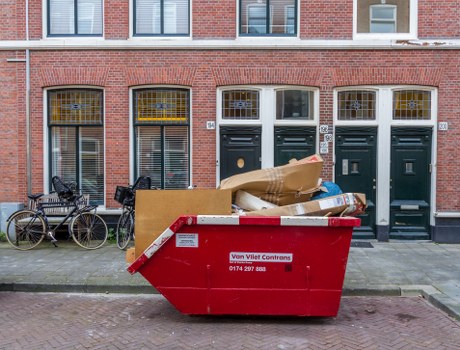
Office clearance in Covent Garden should feel organised, discreet and straightforward, whether you are updating a single suite, emptying a shared workspace or preparing a full commercial move. Our service covers the removal of office furniture, confidential paper waste, IT items, fixtures and general workplace contents, with practical attention paid to access, loading and sorting. The aim is to make the process manageable while keeping the work focused on what needs to leave and what can be kept in use.
We handle clearances for a range of business settings, including small offices, studios, professional rooms and premises that need to be handed back in a tidy state. Where items can be separated for reuse, recycling or disposal, we organise the work accordingly. That approach helps keep the job purposeful and avoids unnecessary handling. If you are comparing options, start by listing what needs removing and any items that require special care.
For a clear quote, it helps to note the type of furniture, the approximate quantity of material and whether the space has stairs, lifts or loading restrictions. You can also mention any access controls or timing considerations that may shape the job. These details make it easier to plan a sensible service, and they support a more accurate quotation before any work begins. Contact us when you are ready to request pricing.
Office furniture clearance and workstation removal
Office furniture clearance often involves more than taking away a few surplus chairs. Desks, pedestal units, meeting tables, storage cabinets, partitions and reception furniture can all require different handling, especially if they are fixed, bulky or awkward to move through narrow internal routes. We remove office items with care for the property layout, helping to reduce disruption in working premises and keeping circulation routes clear while the clearance is carried out.
Workstation removal may also include dismantling where needed, particularly when furniture has been assembled in place or is too large to move intact. In practical terms, that can mean separating tops, bases, shelving or modular sections before loading. If you need to clear a room quickly for decorators, refits or lease-end preparation, a structured approach to furniture removal can help keep the job focused and efficient. Clear instructions at the outset help the team work in the right order.
What is commonly removed
The most common office items include task chairs, desks, shelving, filing cabinets, cupboards, conference tables and soft seating. Some clearances also involve display units, counters, internal fittings and older equipment that no longer has a place in the business. Where items are suitable for reuse or recycling, they can be separated from general waste so that the clearance remains more organised. That distinction is useful for businesses trying to empty space without creating extra handling at the end.
Business waste removal and office disposals
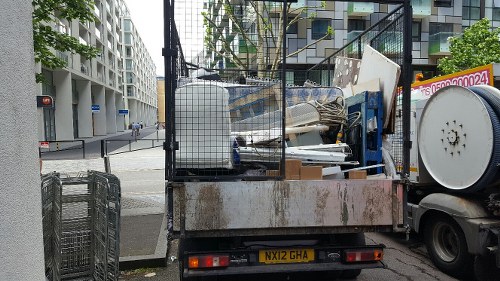
Business waste removal is a useful part of an office clearance when the premises contain a mix of reusable furniture, broken fixtures and day-to-day workplace waste. We can remove mixed office contents in a structured way, but the exact process depends on what is present and how the material is stored. That may include bagged waste, boxed files, unwanted fittings, packaging and items that have accumulated during a move, fit-out or reorganisation.
Office disposals should be handled with a clear eye on sorting and practical handling. Some items are straightforward to carry out and load, while others need extra care because of weight, size or shape. When several categories of waste are involved, it helps to separate them before the clearance begins. That can reduce confusion and support a tidier finish. If you are planning a larger office clear-out, a simple inventory is often enough to get started.
- Furniture and fittings no longer required in the workspace
- Archived paper waste and general office rubbish
- Packaging, boxes and leftover move materials
- Mixed contents from cupboards, stores and side rooms
Where access is constrained, waste may need to be moved in stages from upper floors or from rooms with limited turning space. It is therefore useful to think about lifts, shared corridors and loading points before the clearance day. A practical route plan can save time inside the building. If you would like to discuss the scope before booking, you can send the outline first and ask for a quotation once the main items are identified.
About Covent Garden
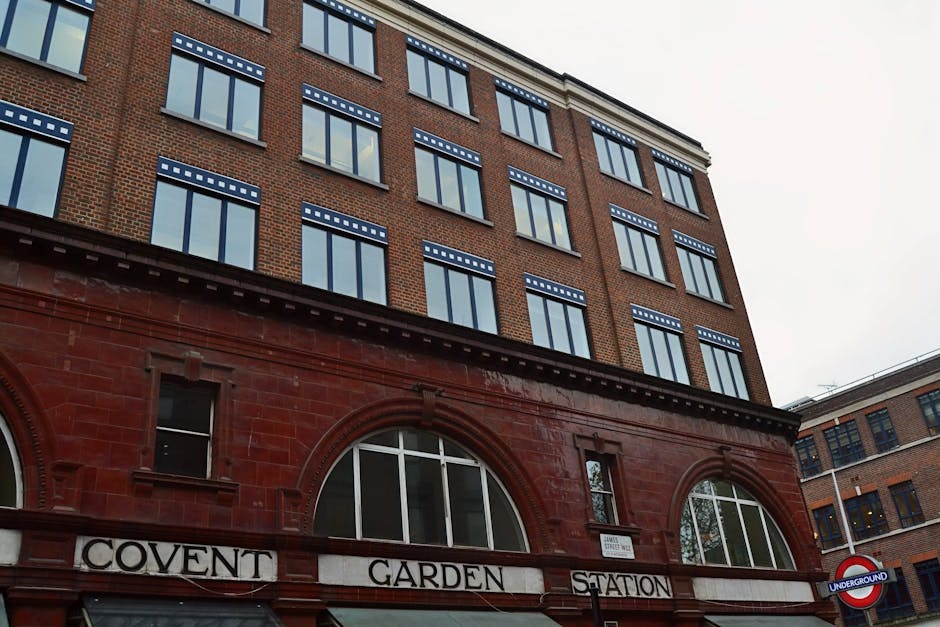
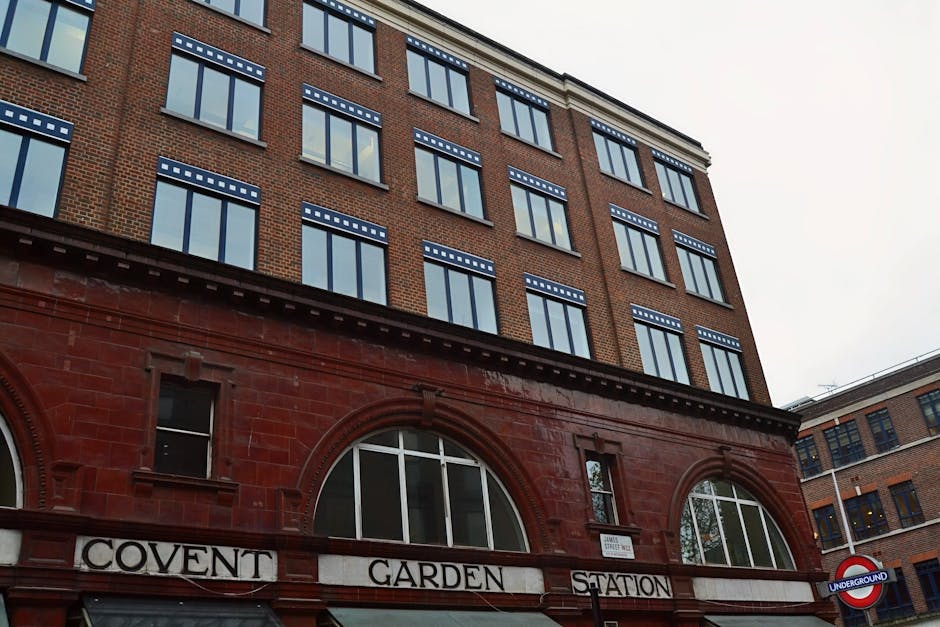
Covent Garden is one of central London’s best-known districts, lying in the City of Westminster and the Borough of Camden around the historic market area that took shape from the seventeenth century onward. Its name comes from the former convent garden of Westminster Abbey, and the area still carries traces of that layered past in its street pattern, market buildings and mixture of older and later architecture. The district is bounded by busy West End streets and sits within an urban landscape shaped by theatres, shopping routes and long-established civic activity. At its heart is the central piazza, associated with the former fruit and vegetable market that helped define the area’s commercial character for generations. Today, the surroundings combine retail frontage, visitor destinations and specialist venues, while the nearby lanes and courts keep a more intimate scale than the main thoroughfares suggest. Architectural interest is especially strong around the market buildings, with their arcades, ironwork and carefully proportioned facades, while nearby streets contain a mix of Georgian, Victorian and later commercial frontages. Covent Garden also has a strong performing arts identity, with theatres and music venues contributing to the neighbourhood’s cultural reputation. The area’s pedestrian movement, public squares and historic fabric give it a distinctive character within central London, and it remains a place where heritage and everyday city activity sit closely together.
Confidential documents and sensitive materials

Many office clearances include files, binders, archives and other paper-based material that should be dealt with carefully rather than treated as ordinary rubbish. We can remove confidential documents as part of a wider clearance, with an approach that keeps the job orderly and practical. Where material needs to be separated from general waste, that can be done as part of the collection plan. This is particularly relevant when offices are closing, relocating or refreshing storage systems.
For businesses with filing rooms or cupboards full of old records, the clearance may involve a staged process rather than one quick sweep. Records can be sorted, boxed and removed in batches so the remaining workspace stays manageable. If some papers are to be retained, it is sensible to mark them in advance. That simple step helps avoid confusion when multiple people use the same office or when several rooms are being cleared at once. Clear labelling can prevent unnecessary lifting and rechecking.
Helpful preparation before the clearance
Before the team arrives, it is often useful to identify anything that must stay on site, particularly files, small devices or leased items. A brief walk-through of the rooms, cupboards and shared storage areas can help you spot items that are easy to overlook. If access is through reception or a managed building, you may also want to check who is responsible for entry and lift use. Those simple details can make a busy clearance much smoother.
IT equipment, small appliances and mixed office contents
Office clearances often include more than furniture and paper. Workplaces may have monitors, keyboards, printers, desktop units, small appliances, cabling and assorted accessories that need to be removed together. We can handle these mixed contents as part of the office clearance, keeping the task organised rather than leaving different categories to be dealt with separately. That is especially useful when desks and technology need clearing at the same time.
Smaller equipment can gather in drawers, cupboards and under-desk areas, so a careful sweep of the room is often worthwhile before the clearance begins. This helps ensure that nothing useful is left behind by mistake and that unwanted items are identified properly. In offices with several users, it is helpful to confirm which equipment belongs where before removal starts. The process then stays more controlled and less disruptive to people still using the space.
Where items are awkward to carry or need to be detached from furniture, it may be better to treat them as part of the wider clearance rather than separate them one by one. That keeps the work practical and reduces repeated handling. If you are preparing a room for redecorating, refurbishment or vacating, it is sensible to bundle the technology list with the furniture list before requesting a quotation. That gives a clearer picture of the task overall.
Recycling, reuse and disposal decisions
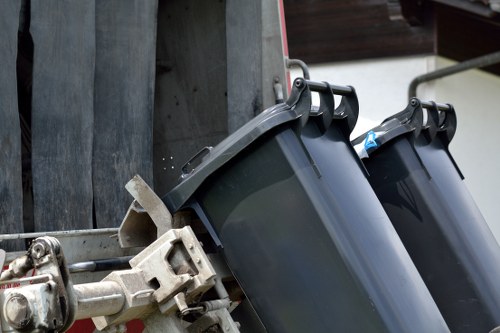
Responsible office clearance is not only about taking things away; it is also about deciding what can be directed to the right next step. Some items may be suitable for reuse, while others are better handled through recycling or disposal. We work through those decisions as part of the clearance, using the condition and type of material as the basis for sorting rather than treating every item the same way.
Furniture made from mixed materials, broken office items and redundant fittings often require different handling from simple bagged waste. A mixed office can therefore benefit from a clearance plan that separates the obvious categories before loading begins. This can make the process tidier and easier to follow, particularly where the premises contain a combination of storage items, equipment and furniture. It also helps businesses keep track of what has been removed from each room.
If you have a shortlist of items that are to be retained, sold or cleared, it is best to keep that list as simple as possible and share it at the enquiry stage. The more clearly the items are described, the more straightforward it is to shape the work into the right sequence. Practical sorting is often the difference between a rushed job and a tidy one.
Planning a commercial clearance in a shared building
Many offices in central London are located within shared buildings, managed blocks or multi-tenant premises. In those settings, clearance work often needs to fit around building rules, lift use and access arrangements. We take those constraints into account when planning the removal, which helps keep the process respectful of neighbours and other occupiers. That can matter as much as the contents themselves when the job is taking place in a busy setting.
It is useful to think about the route items will take from the office to the loading point. Long corridors, stairs, doorway widths and waiting areas can all affect how the clearance is organised. If furniture needs to be dismantled before it moves, that can be incorporated into the plan. The goal is to match the work to the building rather than trying to force the building to fit the work. If you are unsure about access, a brief description is enough to begin the conversation.
Useful details to have ready include the number of rooms involved, the floors served, and whether the clearance is connected to a move, refurbishment or end-of-lease handover. Those points do not need to be written out in great length. A concise description is usually enough to produce a sensible response and a quote that reflects the actual task. Send the essentials first, then ask for pricing.
Office clearance for moves, refurbishments and handovers
Office clearance is often needed when a business is changing location, updating its layout or returning a space at the end of a tenancy. In those situations, the work is usually driven by a deadline and by the need to leave rooms ready for the next stage. We can clear furniture, waste and mixed contents so that the space becomes easier to manage, whether the plan is to refurbish, re-let or simply reset the office for another use.
When a space is being handed over, it is often worth distinguishing between what should stay, what should be relocated and what should be removed entirely. That distinction can prevent useful items from being taken away by mistake and helps the remaining fit-out work proceed more smoothly. If the premises are being updated rather than emptied completely, the clearance can be planned around the work sequence so that the rooms stay usable for as long as possible.
For these projects, a tidy handover begins with a clear list and a realistic timetable. You do not need a complicated plan; you do need enough detail to understand the rooms, the items and the access conditions. Once those points are known, the clearance can be scoped in a way that suits the building and the business. When you are ready, request a quotation and outline the job.
Price factors and quotation details

Pricing for an office clearance depends on the amount of material, the type of items involved and the access needed to remove them. Furniture that can be carried out directly is generally simpler to handle than large fitted items, heavy cabinets or mixed waste from several rooms. Buildings with stairs, restricted parking or longer carrying distances may also affect the scope of the work. A quotation should reflect the actual job rather than a generic estimate.
It is useful to describe the clearance in practical terms, such as the rooms involved, the main categories of items and any special handling considerations. If there are archived papers, bulky desks, display units or technology to remove, mention them together so the scale of the task is clear. Accurate information at the start helps the quote match the work more closely. A short message can be enough to get the process moving.
Whether the project is a compact office or a larger mixed workspace, our approach is to keep the service straightforward and suitable to the site. If you want to move ahead, use the contact route on the website and request a quotation for the items you need removed. A brief outline is enough to begin, and a fuller description can follow if needed.